Supported by Fostering Science, an initiative led by Université Grenoble Alpes in association with CNRS, CEA, Inserm, and Inrae, 6 researchers, including an UGA postdoctoral researcher, are among the winners of the 2026 ERC Starting Grants, one of Europe's most selective funding programs. The awarded projects showcase the diversity and wealth of research conducted in the region.
The six ERC Starting Grants awarded to scientists supported by Université Grenoble Alpes perfectly illustrate the momentum of the UGA 2030 strategic plan, focused on international outreach and supporting scientific excellence.
In a particularly competitive European context—with a success rate of less than 9% for the 2026 cycle (only 421 projects selected out of 4,807 applications)—these grants reaffirm the Grenoble campus’s standing as one of Europe’s leading scientific hubs. Evaluated by peers based solely on the criteria of excellence and groundbreaking innovation, these achievements highlight the quality of the research conducted in the region’s laboratories and demonstrate the UGA’s commitment to attracting and supporting emerging talent.
Who are the six winners, and what are their projects?
Alexandra Colin, CNRS Researcher at the Laboratory of Cell and Plant Physiology (LPCV – UGA/CEA/CNRS/CEA/INRAE)
His project SHARETHEPOOL aims to shed light on how cells simultaneously coordinate different dynamic structures while managing limited resources. To do so, it relies on a quantitative approach combined with biomimetic cellular systems.
Quentin Ficheux, CNRS research fellow at the Néel Institute (NEEL - UGA/CNRS).
His project TURQUOISE focuses on an innovative approach to quantum error correction, based on qubits specifically designed to reduce the occurrence of certain errors. The goal is to optimize the resources required to correct these errors and accelerate the development of fault-tolerant quantum computing.
Nicola Galvanetto, CNRS research fellow at the Institute of Structural Biology (IBS – UGA/CEA/CNRS).
His project INTERFACES proposes to study, at the single-molecule level, the behavior of intrinsically disordered proteins at the boundaries of biomolecular condensates. This research aims to better understand the mechanisms underlying protein aggregation.
Nicolas Scepi, postdoctoral researcher at Université Grenoble Alpes at the Grenoble Institute of Planetology and Astrophysics (IPAG – Université Grenoble Alpes / CNRS).
His project STORM aims to unravel the mysteries of the dense, transient jets of matter ejected by the accretion disks surrounding black holes. The goal is to measure the impact of these outflows on the growth of these celestial objects and on the overall evolution of their host galaxies.
Ségolène Vandevelde, CNRS research fellow at the Environments, Dynamics, and Mountain Territories Laboratory (EDYTEM – CNRS / USMB).
His project TARS aims to reconstruct with great precision the patterns of occupation at prehistoric sites. To achieve this, it is developing an innovative approach based on the analysis of fossilized fire traces in the limestone concretions found in caves and rock shelters.
Florian Wollweber, team leader at EMBL Grenoble.
His ARCHAEAOLOGY project aims to shed light on the origin of eukaryotic cells by mapping the cellular organization of Asgard archaea, their closest known relatives. By combining cutting-edge multiscale imaging techniques, his work aims to create a high-resolution molecular atlas of these complex microorganisms in order to explain the emergence of complex life.
Published on 16 September 2026
Updated on 17 September 2026
About ERC Starting Grants
The European Research Council’s (ERC) Starting Grants enable early-career researchers who earned their Ph.D. within the past 2 to 7 years to fund ambitious exploratory research projects. With funding of up to 1.5 million euros over five years, these European grants support the development of innovative scientific projects and enable the recipients to establish or strengthen their own research teams.
Fostering Science, a dedicated service of Université Grenoble Alpes
Since 2012, the Fostering Science initiative, led by UGA, has been supporting researchers in the Grenoble-Alpes ecosystem who wish to submit a proposal to the European Research Council (ERC). Fostering Science works alongside scientists throughout the entire process of preparing a response to the call for proposals—from understanding the ERC’s requirements to preparing for the interview, including the conceptualization of the project and the actual submission of the research proposal. Of the more than 500 scientists supported by Fostering Science since 2012, nearly 130 have been awarded an ERC grant.
Share the linkCopyCopiedClose modal windowShare the URL of this pageI recommend this page:Available at this address:The page will then be accessible from your "My Favorites" menu.Stop the videoPlay the videoMutePlay audioChat: Have a question?Robo Fabrica ChatbotMatomo Traffic StatisticsX (formerly Twitter)


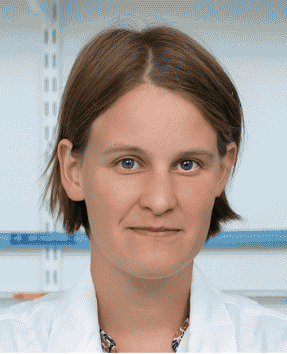 His project SHARETHEPOOL aims to shed light on how cells simultaneously coordinate different dynamic structures while managing limited resources. To do so, it relies on a quantitative approach combined with biomimetic cellular systems.
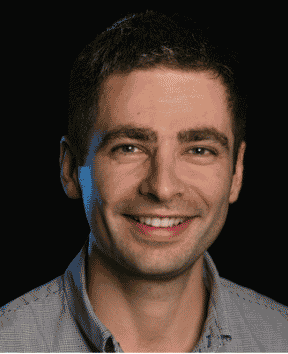 His project TURQUOISE focuses on an innovative approach to quantum error correction, based on qubits specifically designed to reduce the occurrence of certain errors. The goal is to optimize the resources required to correct these errors and accelerate the development of fault-tolerant quantum computing.
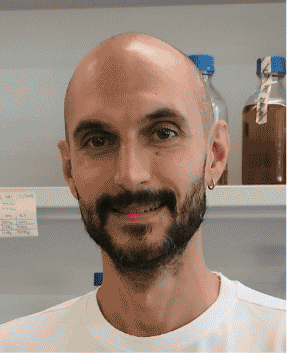 His project INTERFACES proposes to study, at the single-molecule level, the behavior of intrinsically disordered proteins at the boundaries of biomolecular condensates. This research aims to better understand the mechanisms underlying protein aggregation.
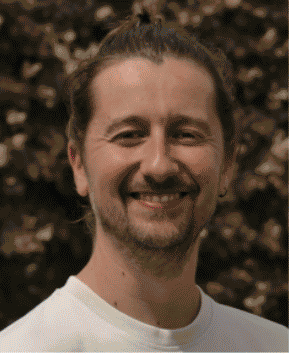 His project STORM aims to unravel the mysteries of the dense, transient jets of matter ejected by the accretion disks surrounding black holes. The goal is to measure the impact of these outflows on the growth of these celestial objects and on the overall evolution of their host galaxies.
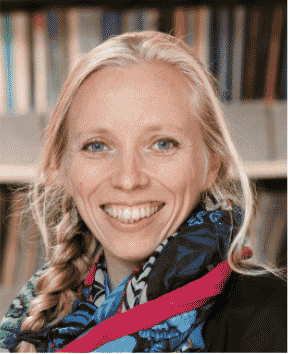 His project TARS aims to reconstruct with great precision the patterns of occupation at prehistoric sites. To achieve this, it is developing an innovative approach based on the analysis of fossilized fire traces in the limestone concretions found in caves and rock shelters.
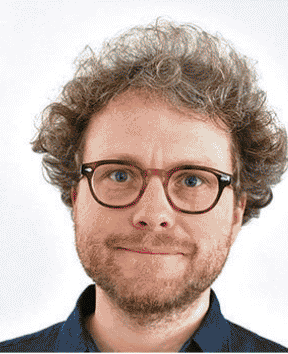 His ARCHAEAOLOGY project aims to shed light on the origin of eukaryotic cells by mapping the cellular organization of Asgard archaea, their closest known relatives. By combining cutting-edge multiscale imaging techniques, his work aims to create a high-resolution molecular atlas of these complex microorganisms in order to explain the emergence of complex life.