Benjamin Sacépé and Nikolai Shapiro, CNRS research directors at laboratories affiliated with the University of Grenoble Alpes, are among the recipients of the 2025 ERC Advanced Grants. This European funding—among the most prestigious and selective in research—will enable the two scientists to lead ambitious projects at the frontiers of knowledge in fields as strategic as quantum physics and volcanic monitoring.
Grenoble Alpes University is delighted with the success of two researchers from its scientific community in the call for proposals
ERC Advanced Grants 2025. Awarded by the European Research Council (ERC), these grants recognize established scientists whose work opens up new avenues in their field. The selected projects receive exceptional support to explore scientific questions with high potential for breakthroughs.
This year, Benjamin Sacépé, a CNRS research director at the
Néel Institute (CNRS/UGA), and Nikolai Shapiro, CNRS Research Director at the Grenoble Institute of Earth Sciences –
ISTerre (UGA/CNRS/USMB/IRD/Université Gustave Eiffel) are among the 319 researchers selected across Europe.
Exploring New Horizons in Quantum Technologies
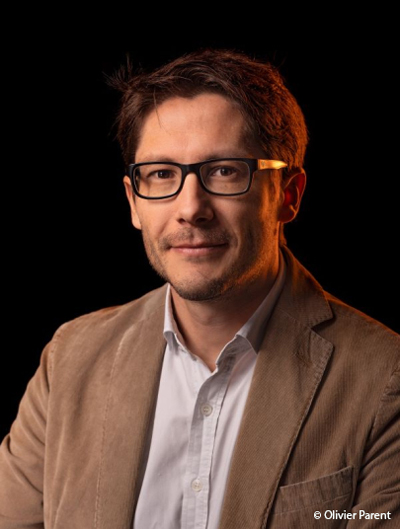
Head of the QuNES team at the Néel Institute,
Benjamin Sacépé His research focuses on the study of the quantum properties of matter, particularly in two-dimensional materials such as graphene. After having already received two ERC grants—a Starting Grant and then a Consolidator Grant—he has now been awarded an ERC Advanced Grant for his project
SUPERHALL – Superconductivity Meets the Quantum Hall Effect.
This project focuses on two major phenomena in quantum physics: superconductivity and the quantum Hall effect. Long considered incompatible, these two states of matter could, however, be combined using innovative devices developed from very high-quality graphene.
The goal is to create new hybrid quantum systems in which superconducting currents flow along the edge channels of the quantum Hall effect. This research will lead to a better understanding of the fundamental interactions between superconductivity, topology, and collective electronic effects.
In the longer term, the project could pave the way for a new generation of programmable quantum circuits and contribute to the development of future topological quantum computing architectures capable of harnessing exotic particles known as
anyons.
Reinventing Volcanic Monitoring with Digital Twins

At ISTerre,
Nikolai Shapiro has been awarded his second ERC Advanced Grant for the project
DeepMagmaWaves – Shedding Light on Deep Magma Transport and Storage through Process-Oriented Volcano Seismology.
A recognized expert in theoretical and observational seismology, he has been developing innovative approaches for several years to better understand the processes taking place inside the Earth. His new project aims to revolutionize the interpretation of seismic signals recorded at volcanoes.
To this end, the teams will develop "seismic-volcanic digital twins" based on the physical laws that govern the evolution of magmatic systems. These numerical models will incorporate magma generation and circulation mechanisms, the internal structure of volcanoes, and the propagation of seismic waves.
The goal is twofold: to test and improve current volcanic monitoring methods, and to develop new tools capable of estimating, with unprecedented accuracy, the volumes of magma stored deep underground and the flows that feed them.
Ultimately, this research could contribute to a better understanding of active volcanic systems and to the development of the next generation of methods for monitoring and predicting volcanic risks.
Recognition of the scientific excellence of the Grenoble Alpes region
With these two new honors, the University of Grenoble Alpes ecosystem reaffirms its European scientific influence in research fields ranging from the basic sciences to major societal challenges.
The
ERC Advanced Grants are among the most competitive funding opportunities in the world. As part of the 2025 call for proposals, the European Research Council selected 319 projects with a total budget of 838 million euros, funded by the Horizon Europe program. These grants enable experienced researchers to carry out particularly ambitious projects that have the potential to lead to major scientific breakthroughs.