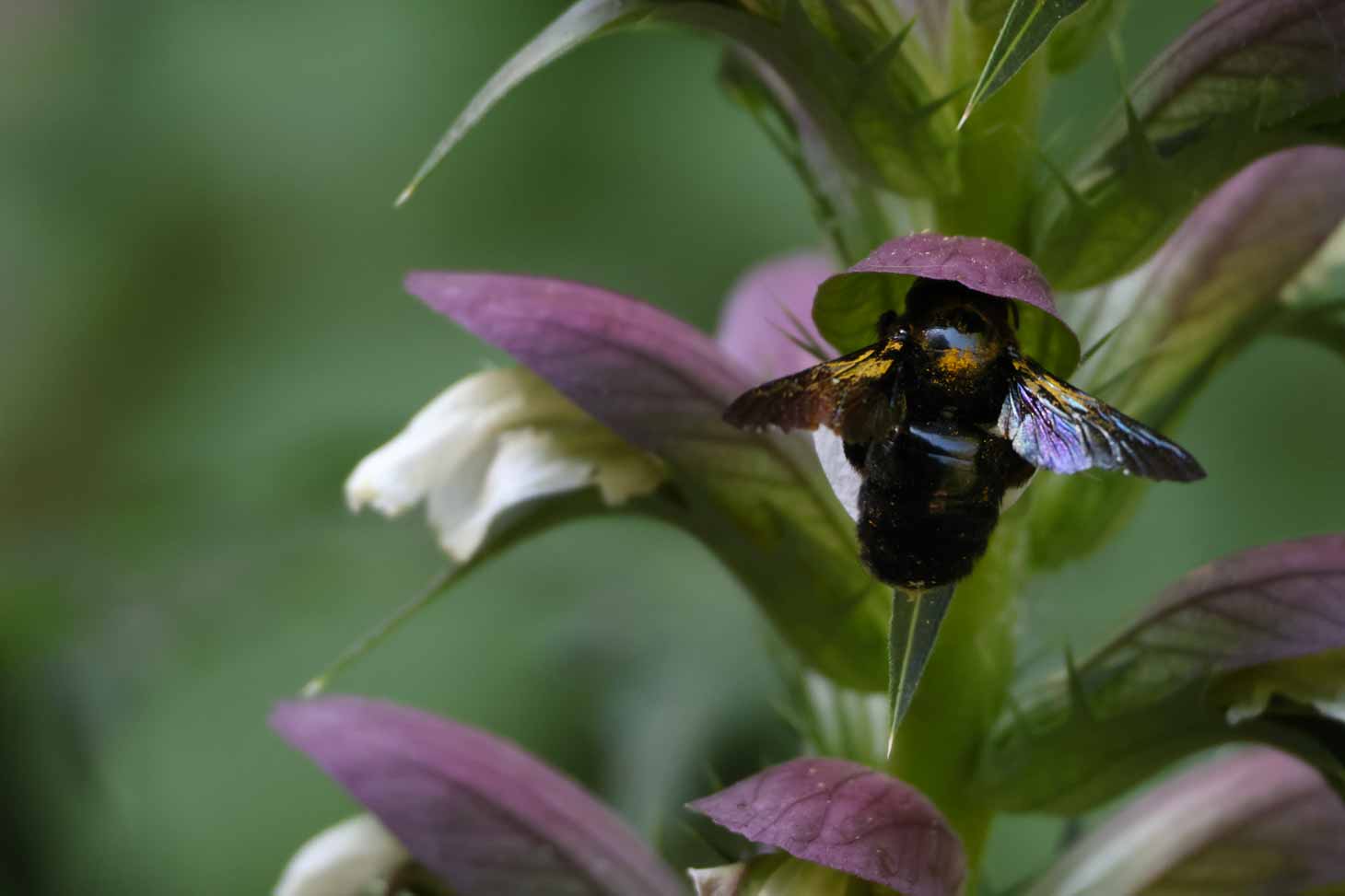
As Biodiversity Month took center stage across all of its campuses throughout June, the University of Grenoble Alpes took another step forward by adopting an ambitious Biodiversity Plan. Structured around 12 concrete commitments, this plan mobilizes the entire university community to preserve, restore, and promote biodiversity at the heart of its activities and spaces.
In the face of biodiversity loss and the challenges of climate change, the University of Grenoble Alpes reaffirms its social responsibility by making the preservation of life a permanent part of its policies and operations.
The result of an extensive consultation process involving students, staff, laboratories, administrative departments, and local partners, the UGA Biodiversity Plan reflects a clear goal: to make its campuses exemplary places where academic excellence, quality of life, and environmental responsibility reinforce one another.
A strategy structured around five key areas
The plan is structured around five main priorities.
The first one aims to
fully integrate biodiversity into the university's policies, so that the institution’s decisions and policies consistently take into account the challenges facing living organisms.
The second focus area consists of
raise awareness and support the transition to action, by fostering a genuine culture of biodiversity among students, staff, and the broader public, while strengthening partnerships with local stakeholders.
The UGA also hopes to
place biodiversity at the heart of its research and educational missions. This involves, in particular, supporting interdisciplinary research, reducing the environmental impact of scientific activities, and incorporating these issues into educational curricula.
The fourth priority area directly concerns the campuses, with a commitment to
preserve and promote biodiversity across all university campuses through measures that promote ecological connectivity, vegetation restoration, and the limitation of land development.
Finally, the university intends to
further promote nature-based solutions to address climate challenges, prevent certain risks, improve the well-being of its community, and strengthen the resilience of its campuses.
Twelve commitments and 22 quantified targets for concrete action
These guidelines are reflected in twelve commitments and 22 quantifiable operational objectives that will guide the institution’s actions in the coming years.
In particular, they address the alignment of the university’s policies with biodiversity issues, the promotion of existing initiatives, staff awareness and training, the development of regional partnerships, the promotion of interdisciplinary research, the integration of biodiversity into academic programs, and changes in campus planning and management practices.
Among these objectives, the plan specifically calls for preserving the campuses’ natural spaces by ensuring that no UGA site will see an increase in its proportion of paved areas by 2030. It also aims to implement a greening project at each of the university’s sites, including the planting of 2,000 linear meters of vegetation. Furthermore, it seeks to integrate biodiversity considerations into all ecological transformation action plans for UGA’s constituent units, central administrative offices, and laboratories.
The plan also calls for greater reliance on nature-based solutions to help university campuses adapt to climate change while improving the living environment for students and staff.
A university-wide collective effort
With this Biodiversity Plan, the UGA is making the preservation of life a key criterion in its decision-making. Campus development, research, education, land management, and partnerships: protecting biodiversity is becoming a fundamental objective and a guiding principle of the institution’s policies, with measurable goals and ongoing monitoring.
View online