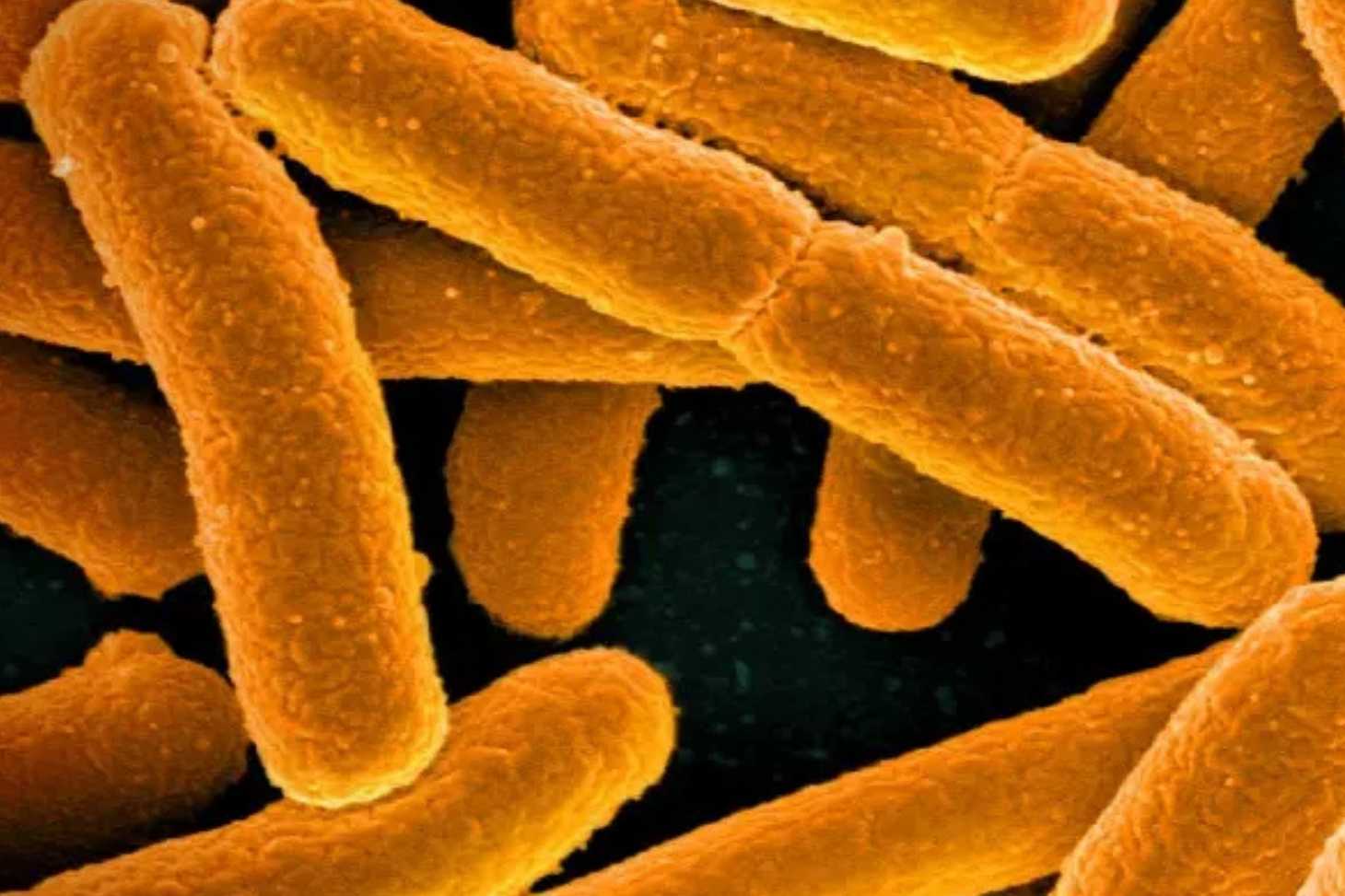
Solving problems by harnessing bacteria’s natural ability to adapt. This is the challenge taken on by a research team led by INRAE and involving the University of Grenoble Alpes, the Grenoble Alpes University Hospital, and the CEA, which was able to distinguish between mild and severe forms of COVID-19 by tracking the growth curves of the bacterium Escherichia coli. The findings, published in *Cell Systems*, pave the way for simple and inexpensive diagnostic methods.
Information processing using living organisms is an important area of biotechnology that has been the subject of previous research[1].
A research team coordinated by INRAE and involving Grenoble Alpes University Hospital, the University of Grenoble Alpes, and the CEA used the bacterium’s natural capabilities without genetically modifying it. Using plasma samples from patients with COVID-19, the scientists were able to distinguish between patients likely to develop a mild form of the disease and those at risk of progressing to a severe form.
To achieve this result, the research team harnessed the bacterium's natural ability to adapt, in this case Escherichia coli. In fact, the bacterium did not evolve to perform calculations but to survive. In its environment, it must constantly detect signals: which nutrients are present, in what quantities, and how these conditions change over time. In response, it adjusts its metabolism and growth. Rather than viewing bacterial growth solely as a biological phenomenon, scientists use it as a way to process information.
How does it work? In the case of clinical samples, the bacteria are placed directly in contact with patients’ plasma: they react to its chemical composition by growing at varying rates, with a growth curve that depends on the combined signals they receive. In other computational tasks studied in the article, the problem is first transformed into a mixture of nutrients, to which the bacteria respond in the same way through their growth. In both cases, this curve is then measured and used to derive a response—for example, to classify a sample into one category rather than another, in this case the risk of developing a mild or severe form of COVID-19. As a result, a bacterium that no one has trained is able to perform tasks typically entrusted to machine learning algorithms.
This approach paves the way for simple, inexpensive diagnostic and prognostic tools that can be used in settings with limited technical resources. The team now plans to explore other applications, such as monitoring environmental samples—particularly urban wastewater—or analyzing other clinical samples. More broadly, the study opens up a new avenue: using living, non-genetically modified organisms as systems capable of transforming the complexity of a sample into actionable information.
Published on July 3, 2026
Updated on July 17, 2026
References
Living Bacterial Reservoir Computers for Information Processing and Sensing.
Ahavi P., Hoang T. N. A., Meyer P., et al. (2026). Cell Systems, DOI: https://doi.org/10.1016/j.cels.2026.101654
Share the linkCopyCopiedClose the modal windowShare the URL of this pageI recommend this page:Available at this address:The page will then be accessible from your "My Favorites" menu.Stop the videoPlay the videoMutePlay audioChat: Have a question?Robo Fabrica ChatbotMatomo Traffic StatisticsX (formerly Twitter)