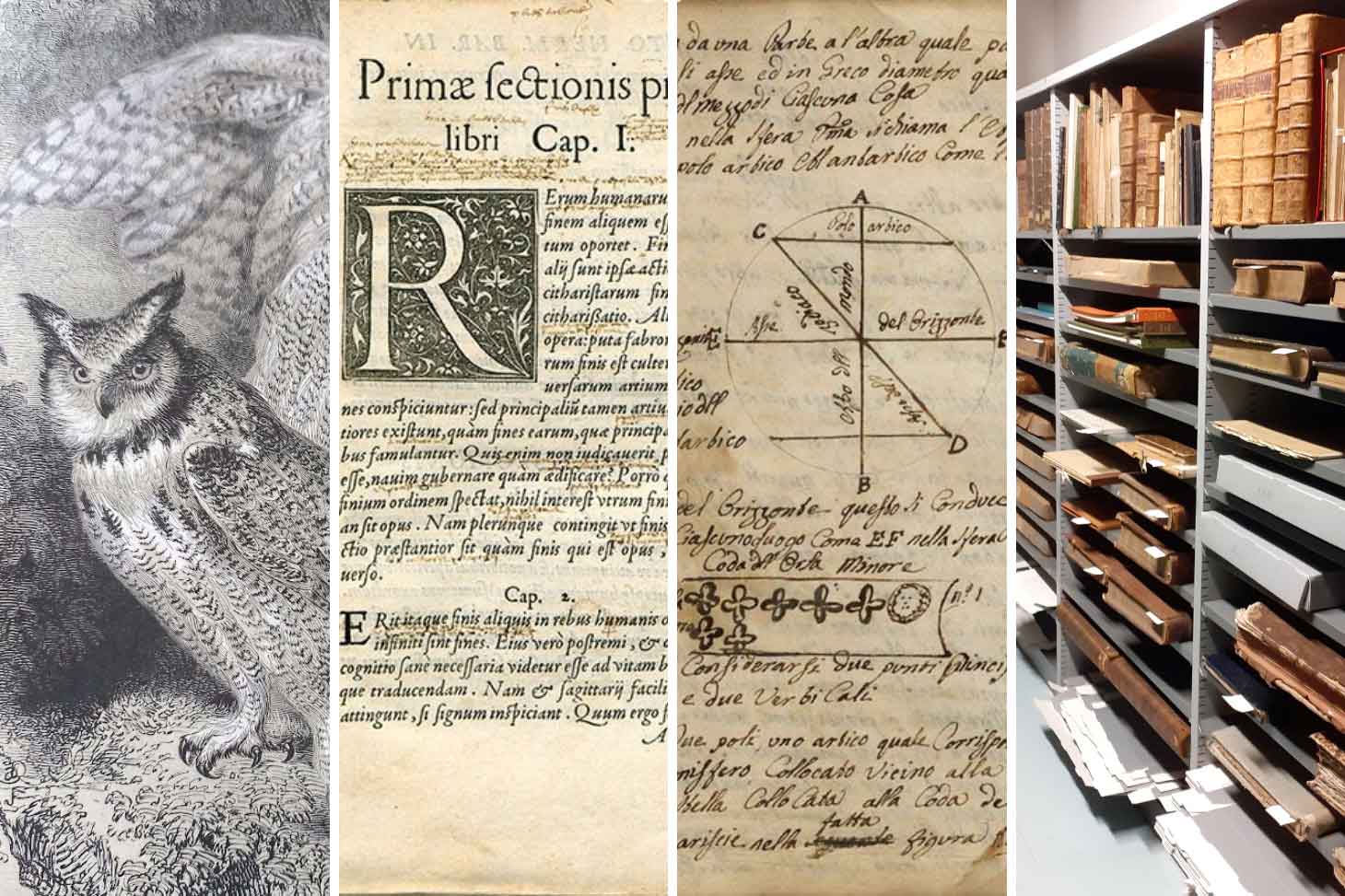
15,000 Treasures to Discover: The Heritage Collections of the UGA University Libraries
December 3, 2025
The university libraries of the University of Grenoble Alpes (UGA) house an exceptional collection of written works. More than 15,000 ancient, rare, or valuable documents, spread across nearly 700 linear meters of shelving, bear witness to several centuries of intellectual, scientific, legal, and literary history. Among them are about 100 unique manuscripts dating from the 15th to the 20th century.
According to the Heritage Code, a heritage collection refers to all “antique, rare, or valuable documents.” In libraries, this term encompasses, in particular, manuscripts, antique books (printed before 1830), historical periodicals, prints and photographs, archives, and maps.
There are three main criteria for classifying a document as part of the cultural heritage: its age, its value, or its rarity (for example, remarkable typography or binding, an artist’s book, or documents published in very limited editions). Meeting just one of these criteria is sufficient for a document to be classified as part of the cultural heritage.
In addition to these criteria, each library may have its own specific considerations: the unique nature of its collections, areas of disciplinary excellence, or the focus of its collection development policy. Thus, certain more recent materials—which are neither rare nor valuable—may nonetheless be designated as part of the library’s heritage collection.
The purpose of archival records is to be preserved indefinitely.
Collections Just a Click Away
To make these collections accessible to the public and to support knowledge and research, the UGA has developed the Digital Heritage Library.
This platform offers a collection of works drawn from the holdings of the UGA’s Law and Humanities, Joseph-Fourier, and Medicine and Pharmacy university libraries. It is intended to reflect the multidisciplinary collections of these libraries.
The selection of titles offered addresses both the need to preserve the originals and, above all, the desire to make old—and sometimes rare—books, as well as reference works, widely available free of charge.
The website allows you to:
free access to view online or download as a PDF,
full-text search for works published after 1800 (using OCR—optical character recognition),
The platform is regularly updated, particularly thanks to the on-demand scanning service, open to readers and researchers.
Discovering the Treasures of Libraries
Beyond preservation, UGA’s university libraries are committed to showcasing this heritage. Regular exhibitions and the European Heritage Days offer the public the opportunity to discover these hidden treasures tucked away in the stacks.
Published on December 3, 2025
Updated on January 6, 2026
Contact
Catherine Hetzel
Head of the Heritage Collections and Digitization Department
Share the linkCopyCopiedClose the modal windowShare the URL of this pageI recommend this page:Available at this address:The page will then be accessible from your "My Favorites" menu.Stop the videoPlay the videoMutePlay audioChat: Have a question?Robo Fabrica ChatbotMatomo Traffic StatisticsX (formerly Twitter)